Over the past year, the launch of a spot XRP ETF in the US has become one of the most talked-about events in the crypto market. The fund’s launch on NASDAQ expanded the range of crypto ETFs and effectively cemented XRP’s status as a recognized institutional asset. After years of controversy surrounding Ripple and intense pressure from regulators, the market received a clear signal. XRP is becoming increasingly integrated into the US’s regulated financial infrastructure.
What is a spot crypto ETF?
It is an exchange-traded fund backed by a real cryptocurrency and that tracks its current market (spot) price without the use of derivatives. Unlike futures ETFs, which operate through contracts on a future price and are subject to contango and backwardation effects, spot funds reflect market dynamics as accurately as possible. This reduces structural distortions in returns and makes the ETF’s impact on cryptocurrency prices transparent. Index crypto ETFs differ in that they track a basket of assets and do not provide targeted exposure to a single token.
The spot model’s key advantage for investors is its combination of simplicity and regulatory transparency. Investors do not need to independently store cryptocurrency, manage private keys, or interact with blockchain infrastructure. This is especially important for institutions, as spot crypto ETF requirements in the US impose strict standards for custody, reporting, and risk management.
The path to launching such funds has been lengthy. The first Bitcoin spot ETFs received SEC approval in January 2024, followed by Ethereum in May. These decisions set a precedent, but XRP remained on the sidelines due to a long-standing dispute between Ripple and the SEC.
XRP ETF Launch in the US
The history of XRP and Ripple’s ETF efforts stems from a years-long legal dispute with the SEC. The dispute began in December 2020 when the SEC accused Ripple of selling $1.3 billion in unregistered securities. The lawsuit created significant regulatory uncertainty, blocking the approval of spot XRP ETFs and limiting institutional access to the asset. It was only after the case was settled in August 2025—with a $125 million fine and confirmation that secondary sales of XRP are not securities—that the path to ETF registration through standard SEC procedures, including Form S-1, became clear. Even then, the largest crypto ETF providers in the U.S. began to view XRP as the next logical asset with which to launch a spot fund. Canary Capital, which organized Ripple’s debut on NASDAQ under the ticker XRPC on November 13, 2025, initiated the launch of the first XRP ETF in the U.S. It is a pure-play spot XRP ETF, meaning the fund holds 100% XRP without any other assets, which is why most sources call it “the first in the US.”
The provider specializes in digital assets and initially built the product to comply with U.S. regulatory standards, targeting both institutional and qualified retail investors. Trading began on one of the world’s largest exchanges, providing the fund with high visibility and access to a broad investor base through traditional brokerage platforms. Within the first few weeks of its launch, the product demonstrated steady capital inflows, confirming market interest in XRP as a regulated investment asset. Two months earlier, in September 2025, another ETF with exposure to spot XRP, Osprey’s REX-XRPR (ticker XRPR), was launched. It is structured under the Investment Company Act of 1940, which requires diversification. This means that it differs from a pure spot ETF in the assets it holds. REX Osprey primarily holds XRP, but also allocates some assets to Treasuries, linked ETPs, and other instruments, making it a hybrid ETF. This is why analysts and the media often distinguish it from “traditional” ETFs, such as Canary, Bitwise, and Grayscale. Nevertheless, the REX-Osprey XRP ETF is unique in its kind. Its product structure complies with the 1940 Act and provides additional investor protections, including strict diversification and management rules. However, it also charges higher fees. These features make it attractive to conservative investors but less popular than “pure spot” alternatives.
Nevertheless, regardless of structure, ETFs are required to meet strict investor protection, disclosure, and risk management requirements. Funds are backed by the underlying asset, do not involve leverage or derivatives, and are stored only through licensed custodians—thus guaranteeing accurate spot price tracking, maximum security, and regulatory compliance.
Why is this important for XRP and the market?
- The emergence of regulated ETFs has fundamentally changed how major market participants access the asset. Through XRP ETFs, institutional investors, including pension funds, insurance companies, and asset managers, can inсlude XRP in their portfolios without interacting directly with crypto exchanges or blockchain infrastructure. This format reduces operational and legal risks for institutions while expanding diversification opportunities in the digital asset segment.
- The launch of the ETF has led to a significant increase in trading activity and capital inflow, directly impacting the liquidity and trading volumes of the new XRP ETF. With its listing on NASDAQ, entry barriers for retail investors and professional traders have been lowered considerably. For private investors, the question of “How can I buy an XRP ETF in the US?” has been simplified to the standard purchase of an ETF through a brokerage account, eliminating the need for crypto wallets.
- The ETF strengthens its fundamental positioning as a regulated product that reinforces the perception of XRP as an infrastructural element of global payment solutions rather than just a speculative instrument. In this context, the spot ETF’s influence on the altcoin market is growing as XRP’s successful use case sets a precedent for other projects with practical applications and real-world financial use cases.
Volume, Liquidity, and Initial Results
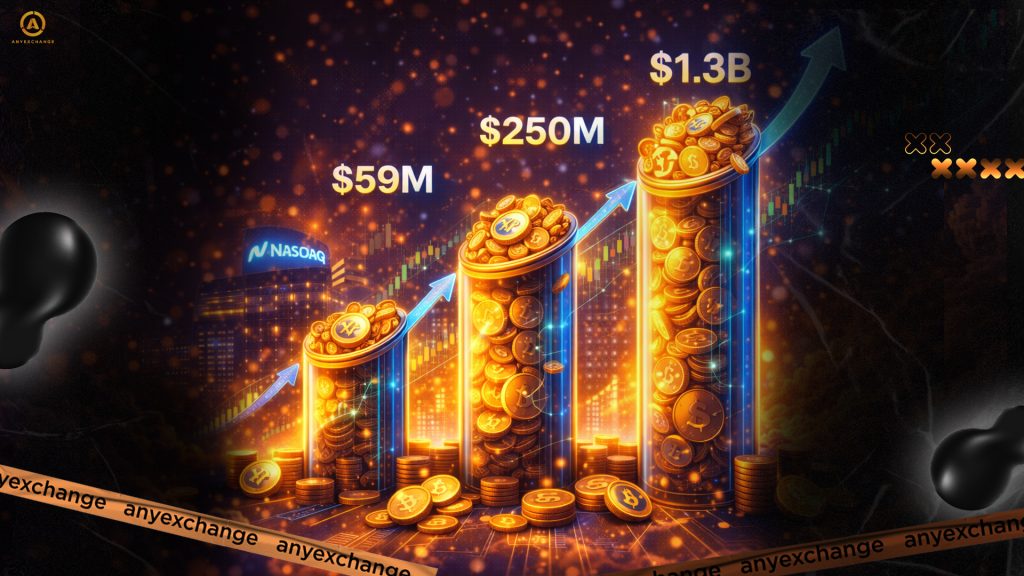
Initial Trading Volumes and Capital Inflow
On its first trading day on NASDAQ, XRPC trading volume exceeded $59 million, and by the end of the first few weeks, cumulative capital inflow into the product approached $250 million, making it one of the highest initial figures among crypto ETFs in 2025. By January 2026, the cumulative inflow had surpassed $1.3 billion, with no significant outflows indicating sustained interest from long-term investors.
Market Reaction and XRP Price Dynamics
Following the launch of the spot ETFs, the XRP price rose from approximately $2.30–$2.40 to an intraday peak of approximately $2.48–$2.52. Then, it entered a consolidation phase near the $2.10–$2.20 range amid short-term profit-taking. This dynamic is typical of institutional launches: the price rises based on expectations, and after the product is released, the market begins to reevaluate and consolidate.
Meanwhile, market participants continue to consider the forecast for XRP growth after the ETF launch, viewing it as the result of long-term capital inflows rather than a single event.
Potential Market Pitfalls
Despite strong quantitative indicators, the ETF launch does not eliminate market risks. High initial volumes and rapid AUM growth make XRP more susceptible to short-term speculation and sharp shifts in market sentiment. In such an environment, key indicators inсlude the stability of daily capital inflows, the absence of sharp outflows, and the dynamics of institutional demand rather than just the price movement of the token.
Comparison with Other Crypto ETFs
Despite their superficial similarity in format, the products differ fundamentally. Comparing XRP ETFs with BTC and ETH ETFs shows that Bitcoin ETFs focus primarily on value preservation, while Ethereum ETFs reflect demand for smart contract infrastructure and DeFi. XRP ETFs occupy a distinct niche by focusing on cross-border payments and financial settlements.
In terms of scale, the XRP ETF market is smaller than more mature products. Its total assets under management (AUM) exceed $1.89 billion, while BTC and ETH ETFs handle tens of billions of dollars. Nevertheless, the XRP segment’s growth rate remains among the highest among altcoin ETFs.
The XRP ETF’s unique capabilities lie in the practical nature of its underlying asset. Unlike most crypto ETFs, demand for this ETF is driven by both investment expectations and real financial use cases in the context of integration with banking and payment systems.
However, the XRP ETF market is less mature and more sensitive to regulatory signals due to Ripple’s previous legal history and the attention it receives from regulatory authorities.
Risks and Investment Considerations
- Regulatory uncertainty remains a key factor. The unpredictability of the influence of regulations on the approval of the XRP ETF remains a key factor, as the SEC’s position on the classification of digital assets may change based on case law and political developments.
- Volatility and market distortions. XRP has traditionally been highly sensitive to news events and large trades. Launching an ETF does not eliminate this factor; in certain phases, it may even exacerbate it. Concentrating trading volumes within an ETF increases the risk of short-term supply and demand imbalances, which may affect the coin’s price.
- Tax and transaction costs. In most cases, the tax treatment of US spot crypto ETFs is equivalent to the taxation of securities transactions. Depending on the holding period and the investor’s tax status, capital gains tax is applied. From an operational perspective, it is also important to understand which banks and brokers offer XRP ETFs because the availability of the instrument depends on the brokerage’s specific infrastructure and terms of service. Additional risks inсlude fund fees, custodial costs, and potential deviations from the net asset value during periods of increased volatility. All of these factors directly impact the XRP ETF’s overall risk-reward profile.
Outlook and What’s Next
Following the ETF’s successful launch, analysts predict continued capital inflows. Expected capital flows through 2026 could exceed $2 billion. Expanding the product line to inсlude multi-asset ETFs (e.g., XRP+BTC) will attract investors seeking diversification and institutional demand.
Regulated access strengthens XRP’s positioning as a key element of payment networks and financial infrastructure. By December 2025, over 400 million XRP will be locked in institutional funds, enhancing network stability and opening up new opportunities for integration with banks and payment providers.
How Investors Can Build a Strategy
To optimize risk management, investors are advised to:
- Enter during price consolidation phases.
- Monitor capital flows into the XRP ETF, including institutional inflows and interest.
- Monitor regulatory signals.
- Combine short-term and long-term strategies, taking into account current volatility.
Frequently Asked Questions (FAQ)
- What is the XRP Spot ETF, and how does it work?
It is a fund backed directly by XRP that tracks the token’s spot price through a licensed custodian without using derivatives.
- Why is the launch of the XRP ETF important for the cryptocurrency market?
The launch stimulates institutional capital inflows, increases the coin’s liquidity, and confirms its status as a foundational asset for payments and financial infrastructure.
- How can the launch of the XRP ETF impact the price of the XRP token?
Thanks to the ETF, capital inflows have a positive impact on the long-term outlook for XRP—the token’s value will rise even with continued volatility.
- What are the risks of investing in the XRP ETF?
Risks inсlude regulatory uncertainty, high volatility, tax considerations, and the fund’s operating expenses.
Conclusion
The launch of the XRP spot ETF in the US marks a new milestone for the coin and the entire crypto market. This product provides direct access to the token for institutional and retail investors, confirming its growth potential and strengthening XRP’s position as a global payment asset.
Thank you for your attention. Invest safely and profitably!
AnyExchange is an exchange service where you can convert cryptocurrency at the best rates and make secure money transfers worldwide.